Introduction
Glass drilling technology plays an important role in modern manufacturing, particularly in industries such as consumer electronics, automotive, and optical devices. Traditional mechanical drilling methods, which can lead to glass breakage, cracks, and precision issues, have gradually been replaced by laser technology. Laser drilling uses high-energy laser beams to precisely process glass without physical contact, effectively avoiding the defects caused by traditional methods. With the continuous development of laser technology, glass laser drilling has seen significant improvements in precision and efficiency, while also showing enormous potential in adaptability and multifunctionality. This article will explore the principles, technological advantages, application scenarios, and future development trends of
glass laser drilling.
Principles and Advantages of Glass Laser Drilling
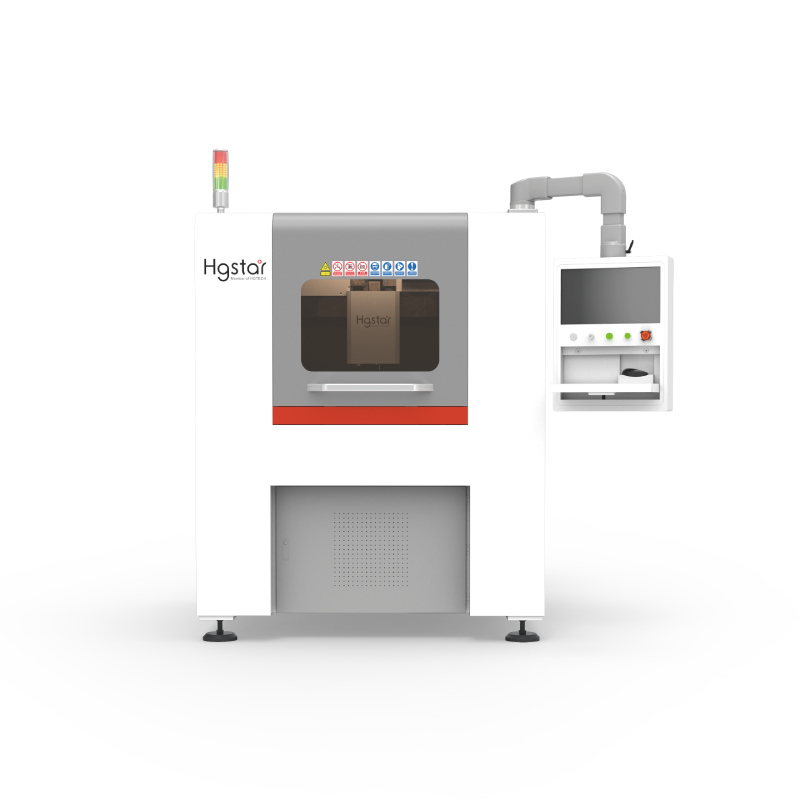
Glass laser drilling works based on the principle of locally heating the surface of glass with a laser beam to create precise holes. A laser generates a high-energy density beam that directly interacts with the glass. Upon absorption of this energy, the local area is heated to extremely high temperatures, causing the glass to melt or evaporate, forming a hole. Unlike traditional mechanical drilling, laser drilling avoids the indentations, cracks, or debris that result from contact.
Advantages of Laser Drilling
High Precision Processing
Laser drilling technology provides extremely high processing precision, with hole diameters controllable at the micron level. It meets the needs for complex micro-hole processing, and in fields like optical devices and smartphone glass, it has become the standard processing method.
Non-Contact Processing
Laser drilling does not require physical contact, preventing damage to the glass surface caused by contact with tools. This feature is particularly important for thin-film glass or high-strength glass.
Flexibility and Versatility
Laser drilling can process holes of various shapes and sizes, even multi-hole or irregular holes. This flexibility allows it to meet special design needs, such as the creation of tiny non-circular holes in optical glass.
High Efficiency and Low Cost
Laser drilling offers high production efficiency, capable of completing a large number of hole-processing tasks in a short period. This not only increases output but also reduces unit costs. Additionally, laser equipment has a long service life, reducing the frequency of maintenance and tool replacement.
Small Heat-Affected Zone
Laser heating is extremely rapid, resulting in a very small heat-affected zone. This minimizes the potential for thermal damage to other parts of the glass. This makes laser drilling ideal for heat-sensitive glass materials.
Technological Advancements
As laser technology continues to advance, the precision and speed of glass laser drilling have significantly improved. The focus of laser systems has become smaller, and the power has steadily increased, enabling laser drilling to process even more challenging micro-holes. The range of processing has also expanded from flat glass to curved and laminated glass, as well as other complex structures.
Application Areas and Future Prospects
Glass laser drilling technology has already been widely applied in various industries. In the consumer electronics sector, laser drilling is commonly used for manufacturing touch screen glass and camera protection glass for smartphones and tablets. The automotive industry utilizes laser technology for processing glass and car light components, improving product strength and safety. The medical industry has also started to apply glass laser drilling in medical devices and ophthalmic equipment, meeting high-precision requirements.
Looking ahead, with continuous innovations in laser technology, glass laser drilling is expected to see even broader applications in fields such as photovoltaics, optics, and clean energy. The demand for this technology is projected to grow exponentially. It is expected that laser drilling technology will become further intelligent, integrating AI and automation technology to enable unmanned production, and expanding to process more types of glass materials. This will improve production efficiency and reduce costs. Glass laser drilling will continue to drive the global manufacturing industry toward higher precision, greater efficiency, and lower costs.