Why acceleration, machine dynamics and non-cutting time matter more than maximum speed alone
In laser cutting, “faster” is one of the industry’s most common claims. More power, higher cutting speed and faster positioning all matter—but none of them alone defines real productivity.
For manufacturers, the more useful questions are simple: How long does a full sheet take? How many good parts can one shift produce? Can the machine maintain speed, quality and stability on the customer’s actual work?
Is “high-speed laser cutting machine” a defined category?
The phrase is used around the world, but it does not yet describe one universally standardized machine category. Depending on the supplier, it may refer to higher laser power, faster feed rates, high-speed positioning or a specific cutting process.
This creates an important distinction: a machine can be fast in one published parameter without delivering the shortest total cycle time on a real production sheet.
WORKING DEFINITION
A high-speed fiber laser cutting machine is a high-dynamic production system engineered to shorten total sheet-processing time—not simply a machine with a higher maximum speed or higher laser power.
Why higher power does not always mean higher productivity
Laser power primarily affects cutting capability and feed rate within a given material and thickness range. It can deliver a clear advantage on thicker material and long contours.
But thin-sheet jobs with small parts, dense holes and complex outlines contain many short movements. The machine repeatedly accelerates, slows, changes direction, pierces, lifts the head and moves between contours. It may never reach its theoretical maximum cutting speed before it has to decelerate again.
In these applications, adding power alone may not reduce full-sheet cycle time proportionally. Higher power helps the beam cut faster; higher machine dynamics help the entire sheet finish faster.
Why maximum speed is only part of the answer
Maximum positioning speed indicates long-move potential. Real sheet-metal nests, however, are often filled with short paths, holes, corners and repeated transitions.
Productivity then depends on how quickly and reliably the machine can:
- accelerate and decelerate;
- change direction and control corners;
- move between parts and contours;
- pierce and resume cutting;
- maintain accuracy and cut quality at high dynamics.
Five characteristics of a true high-speed system
1. High dynamic response
Strong acceleration allows the machine to reach productive motion sooner and recover speed quickly after a corner or direction change. This is especially valuable on short paths, dense holes and compact parts.
2. Fast coordinated positioning
High coordinated positioning speed reduces travel between contours. A small saving per move becomes significant when repeated hundreds or thousands of times across a sheet.
3. Stable cornering at speed
Speed must not create distorted holes, burnt corners, contour error or inconsistent edges. The frame, beam, drives, servo control and motion algorithms must work as one system.
4. Less non-cutting time
Piercing, head lift, leapfrog movement, edge finding, autofocus, process changes and path planning all affect sheet throughput. Reducing these intervals can be as important as increasing feed rate.
5. Repeatable production stability
A record-setting demonstration is not the same as sustained output. High-speed performance must remain accessible to operators and repeatable across long production runs.
High-speed versus conventional fiber laser cutting
| Focus |
Conventional fiber laser |
High‑dynamic laser cutter |
| Primary goal |
Broad cutting capability |
Higher sheet throughput |
| Main productivity driver |
Laser power and cutting process |
Acceleration, positioning, motion control and process coordination |
| Best‑fit geometry |
Large parts and long contours |
Small parts, dense holes, short paths and complex contours |
| How to evaluate |
Power, thickness range and maximum speed |
Full‑sheet cycle time, good parts per hour and cost per part |
There is no absolute technical boundary between the two. The practical difference is the design priority: broad cutting capability versus maximum throughput on demanding, high-cycle sheet-metal work.
Who benefits most?
A high-dynamic machine is especially relevant when the customer:
- processes a high share of thin and medium-thin sheet;
- cuts small parts, dense holes, short segments or complex contours;
- runs stable volumes over long operating hours;
- faces delivery pressure, overtime, outsourcing or capacity constraints;
- wants more output without adding the same amount of labor and floor space;
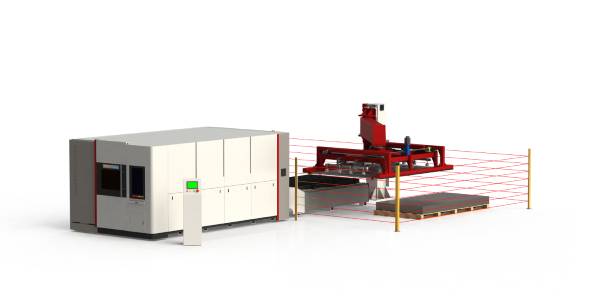
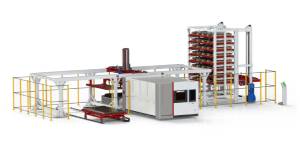
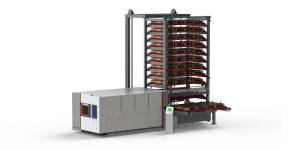
- plans to integrate automatic loading, storage or production scheduling.
Typical applications include electrical cabinets, server racks, elevators, commercial kitchens, appliances, metal furniture, signage, electronics enclosures and general batch sheet-metal production.
Who may not need one?
A high-speed machine may not be the first priority when the customer mainly cuts very thick plate, operates at low utilization, processes mostly large parts and long straight contours, or has a larger bottleneck in loading, sorting, bending, welding or finishing.
The right machine is not the one with the highest numbers. It is the one that best matches the customer’s material mix, geometry, volume and production constraints.
How to compare two machines correctly
Use the customer’s real drawing and keep the conditions consistent: material, thickness, laser power, assist gas, nesting and quality requirements. Then measure:
- complete sheet-processing time;
- good parts produced per hour;
- hole, corner and edge quality;
- dimensional consistency;
- continuous-production stability;
- gas, power and consumable use;
- readiness for downstream bending and assembly.
From speed to cost per part
Purchase price alone does not determine the value of a high-speed system. The business case should include additional good-part output, lower overtime and outsourcing, shorter lead times, reduced delivery losses, and avoided labor or floor-space expansion.
ROI FRAMEWORK
Annual value = added good-part output + avoided overtime and outsourcing + labor and floor-space savings + avoided scrap and delivery losses − annualized equipment cost
Because every material mix and production schedule is different, ROI should be calculated from real drawings and actual daily volume—not from an unconditional percentage claim.
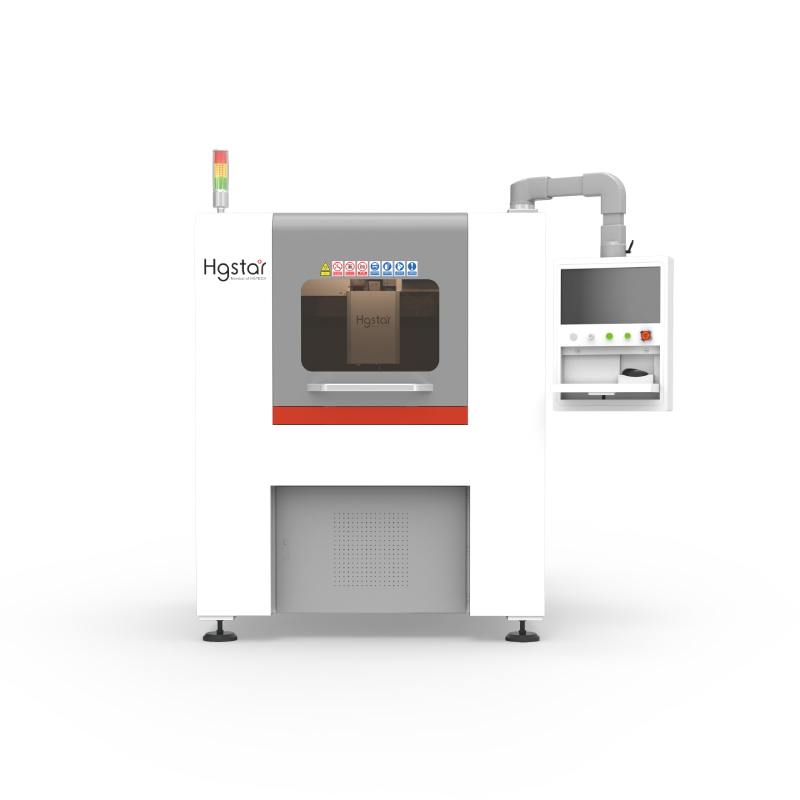
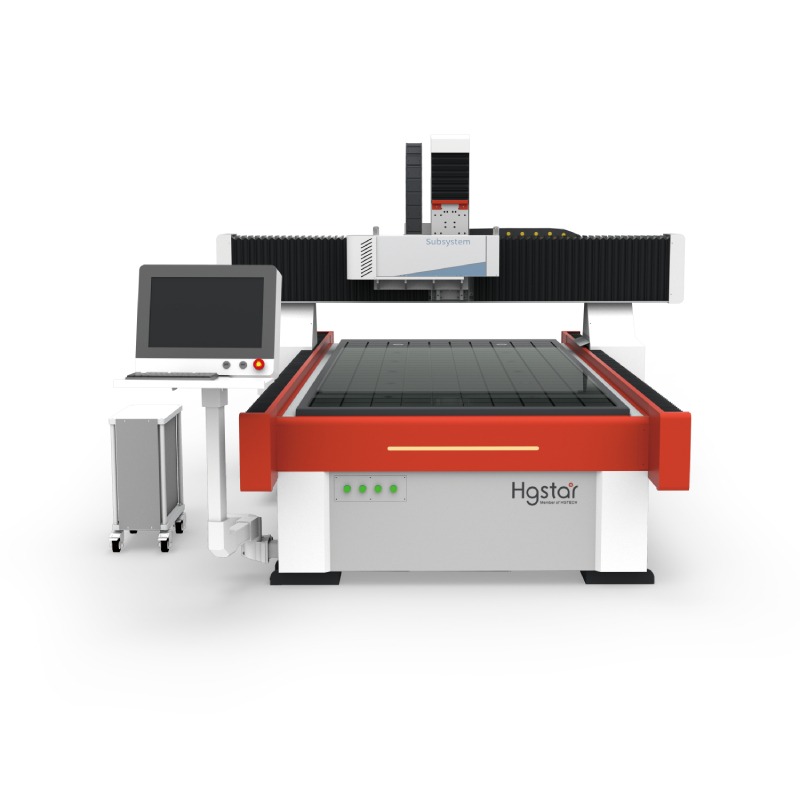
Ultra-Fast 3015: designed for high-cycle sheet production
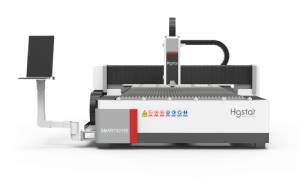
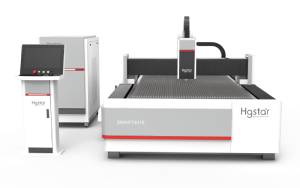
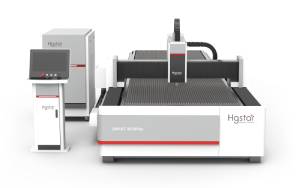
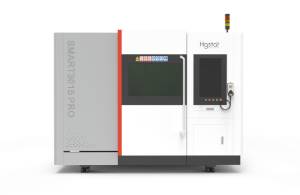
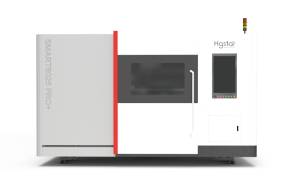
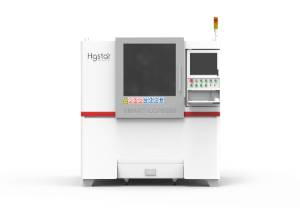
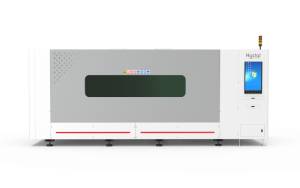
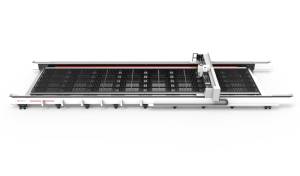
Ultra-Fast 3015 is designed for high-cycle applications involving thin and medium-thin sheet, small parts, dense holes and complex contours. It combines a standard 3000 × 1500 mm working area with maximum coordinated acceleration of 2.5G and maximum coordinated positioning speed of 169 m/min.
Its purpose is not to win with one isolated speed figure. It is to reduce starting, stopping, cornering, positioning and other non-productive intervals through coordinated machine dynamics and process control.
For manufacturers with stable demand, dense nests and real capacity pressure, this offers an alternative to pursuing productivity through laser power alone.
True speed means more productive output
Laser cutting is moving from a question of “Can it cut?” to “Can it cut more productively, consistently and economically?”
The question that matters is: With my materials, drawings and production schedule, how many more good parts can this machine produce per shift?
Customers do not ultimately buy a speed number. They buy shorter cycle times, more reliable delivery and a lower cost per good part.