Bridge Steel Laser Cutting Technology Overview
As modern bridge engineering continues to demand higher structural performance, faster construction cycles, and improved material efficiency, traditional steel processing methods are no longer sufficient. Issues such as limited precision, long production time, and material waste have become increasingly evident. Bridge steel laser cutting has emerged as an advanced manufacturing solution that addresses these challenges through high-power laser technology and computer numerical control (CNC) systems. It enables precise cutting of bridge steel structures with complex geometries while maintaining high efficiency and consistency. Compared with conventional cutting methods, laser processing produces minimal heat-affected zones, resulting in cleaner edges and reducing the need for secondary processing such as grinding or rework. This significantly improves downstream welding and assembly quality, making bridge steel laser cutting a reliable solution for modern infrastructure projects.

Process and Advantages of Bridge Steel Laser Cutting
Bridge steel laser cutting works by directing a high-energy laser beam onto the surface of steel plates, causing localized melting or vaporization. The molten material is removed by an assist gas, completing the cutting process under CNC control. This allows precise fabrication of structural components based on digital engineering drawings. Whether producing beams, connection plates, or complex curved components, the process ensures high dimensional accuracy and repeatability. In operation, steel plates are placed on a cutting table, and after 3D laser scanning and CNC programming, the laser head follows a predefined path to complete cutting with stable quality.
Compared with flame cutting or plasma cutting, laser cutting significantly reduces the heat-affected zone, preserving the mechanical properties of steel and lowering the risk of deformation during welding. It also improves production efficiency by enabling faster cutting speeds and reducing downtime, which shortens overall project delivery time. In addition, material utilization is optimized through precise nesting, minimizing scrap waste, especially when processing high-strength or thick steel used in bridge structures. Bridge steel laser cutting is also highly compatible with smart manufacturing systems. By integrating CAD/CAM platforms, cutting machines can automatically read design files and adjust parameters, enabling digitalized and automated production. This reduces manual intervention, improves safety, and enhances consistency in mass production. Most importantly, laser-cut steel components ensure tight tolerances, smooth assembly, and stable structural performance, which are critical for bridge engineering projects where precision directly affects safety and reliability.
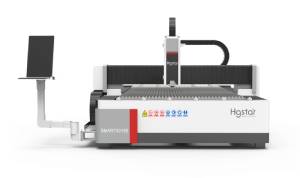
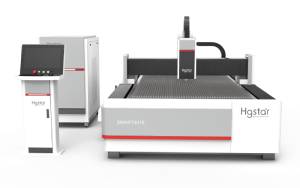
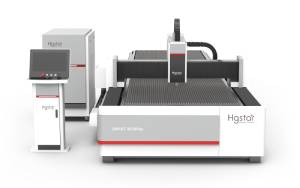
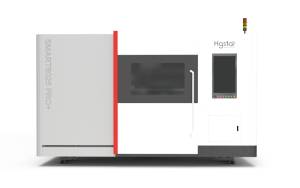
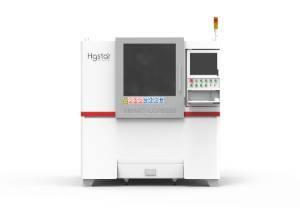
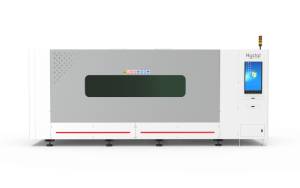
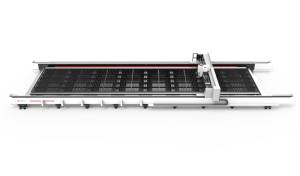
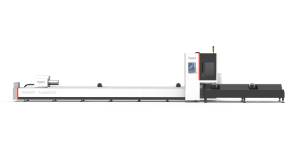
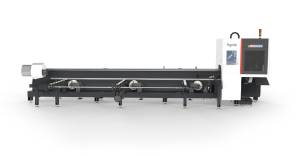
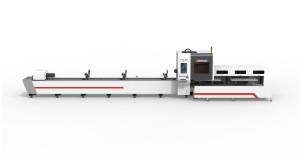
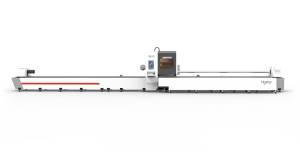
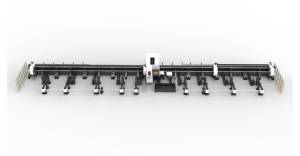
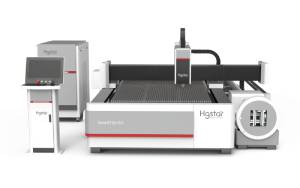
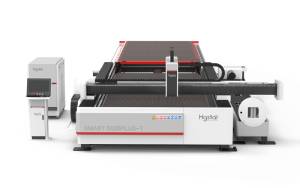
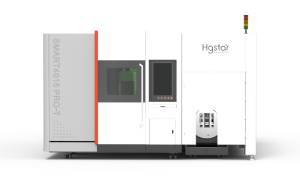
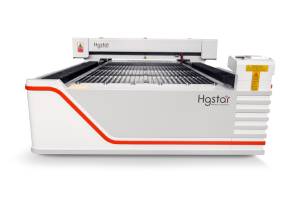
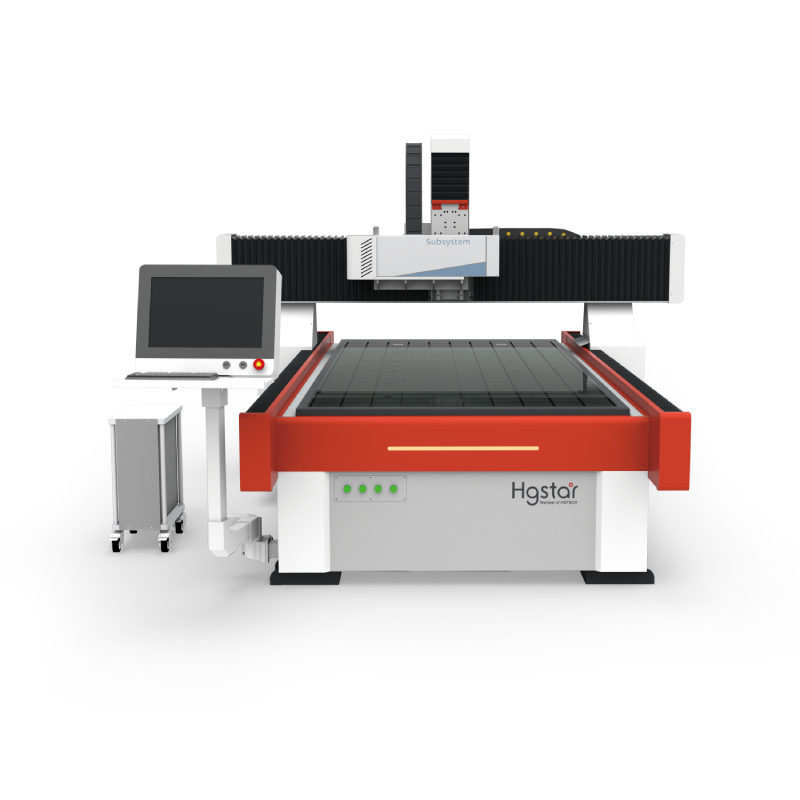
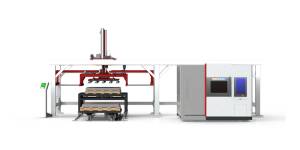
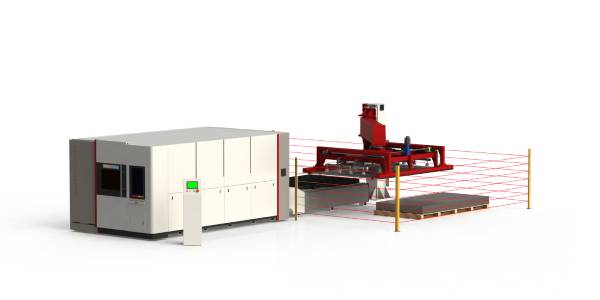
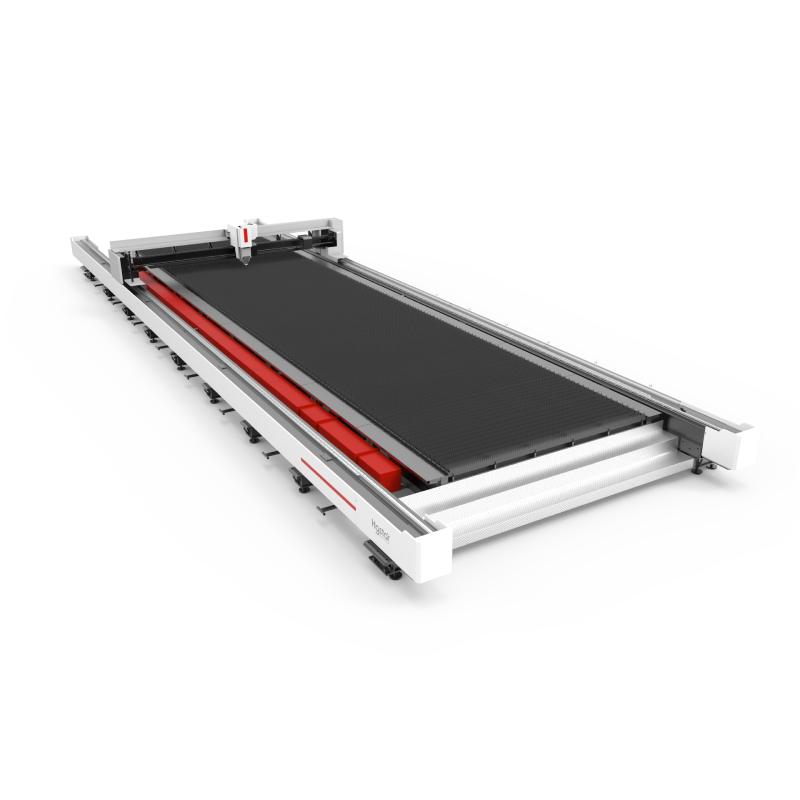
The HGSTAR Smart LA series bridge-type laser cutting machine is engineered for efficient processing of steel bridge structures and heavy road infrastructure components. Equipped with a 6,000–30,000 W fiber laser and a gantry-style dual-drive system, its welded and stress-relieved bed supports a maximum processing area of 14,000 × 3,500 mm.
The machine enables one-stop operations including straight cutting, bevel cutting, piercing, hole cutting, and marking of H-beams and steel plates. It delivers positioning accuracy of ±0.05 mm and repeatability of 0.03 mm, producing burr-free cuts without secondary grinding. Compatible with carbon structural steel and alloy bridge steel, it supports large-scale bridge projects and heavy steel fabrication.
Integrating seamlessly with Tekla and BIM digital production systems, the HGSTAR Smart LA series can reduce steel processing time by up to 50%, offering high efficiency, precision, and reliability for global infrastructure projects.
Future Development of Bridge Steel Laser Cutting
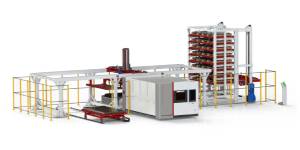
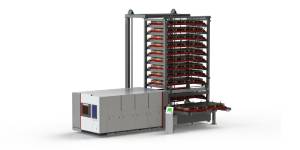
With the advancement of smart manufacturing and industrial digitalization, bridge steel laser cutting is moving toward higher automation, greater precision, and more intelligent production systems. Future integration with 3D laser scanning, robotic handling systems, and real-time monitoring technologies will further improve efficiency and reduce production costs. These innovations will also enhance structural quality and construction reliability. As bridge projects become larger and more complex, bridge steel laser cutting will continue to play a key role in steel structure fabrication, providing efficient, precise, and scalable solutions for global infrastructure development.