The Core Role of Steel Structure Cutting in Modern Heavy Manufacturing
Steel structure cutting is a fundamental process in heavy manufacturing and construction engineering, and its processing quality directly determines the assembly accuracy, structural safety, and service life of the final project. In applications such as bridge engineering, large industrial plants, energy equipment, and offshore structures, steel structure cutting is not only the starting point of material forming, but also a key upstream process that significantly affects welding fit-up quality and modular assembly efficiency.

As engineering structures continue to evolve toward longer spans, higher load-bearing capacity, and more complex joint geometries, the materials and geometrical complexity involved in steel structure cutting are also increasing. Traditional experience-driven processing methods are gradually unable to meet modern requirements for precision consistency and batch stability. This has accelerated the industry’s shift toward digitalized and high-precision cutting systems.
Technological Evolution and the Logic of Intelligent Manufacturing Transformation in Steel Structure Cutting
From the perspective of manufacturing system evolution, the core challenge of steel structure cutting is shifting from “whether cutting can be completed” to “how to achieve high consistency, high efficiency, and low total cost under complex engineering constraints.”
Traditional flame cutting and plasma cutting still maintain certain advantages in thick plate processing scenarios. However, their inherent limitations—such as high heat input, unstable cut quality, and difficult-to-control heat-affected zones—make them increasingly unsuitable for high-precision steel structure manufacturing systems. In bridge nodes, spatial steel structures, and modular building systems, these limitations often lead to additional rework and manual correction, significantly increasing production cycles and cost uncertainty.
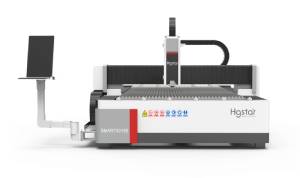
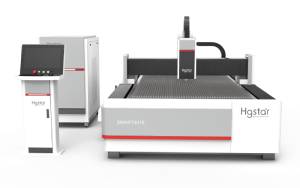
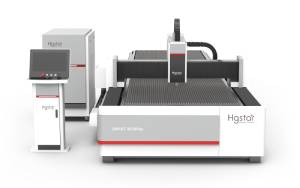
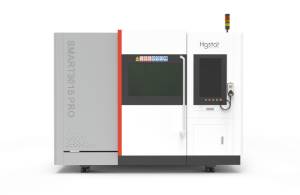
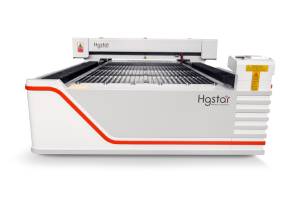
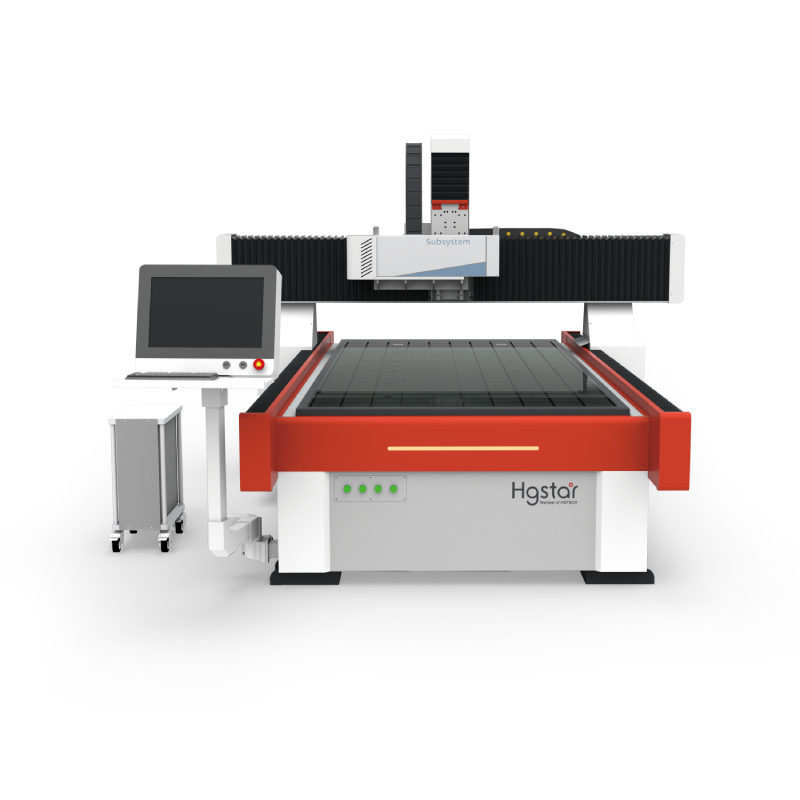
In contrast, advanced fiber laser-based cutting technology is reshaping the entire processing logic. Laser cutting uses a high energy density beam to achieve non-contact processing, concentrating energy input and significantly reducing thermal deformation and stress accumulation during steel structure cutting. This enables more stable dimensional control and makes complex contour cutting, high-precision hole machining, and one-step forming of irregular joints possible—especially as high-strength and ultra-high-strength steels become more widely used.
More importantly, steel structure cutting is evolving from a standalone machining operation into a data-driven manufacturing node. Through deep integration with BIM models, CAD nesting systems, and MES production management platforms, cutting processes can directly map digital design data into physical toolpaths, significantly reducing human errors and information loss during data conversion.
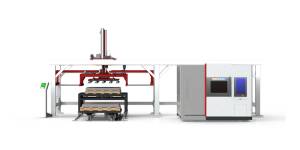
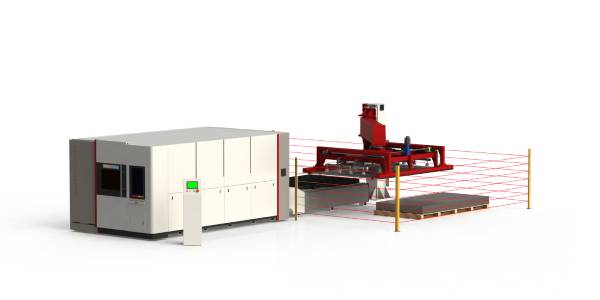
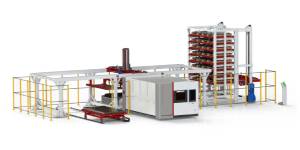
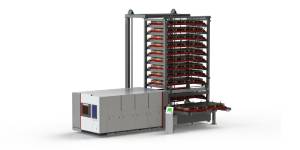
With the support of automated nesting algorithms, dynamic toolpath optimization, and material utilization improvement technologies, the overall cost efficiency of steel structure cutting is being systematically improved. At the same time, it has become an integrated part of automated production lines, including loading, identification, processing, sorting, and traceability systems.
Modern intelligent systems also introduce vision recognition and sensor feedback mechanisms, enabling real-time detection of material deformation, surface conditions, and machining deviations. This allows dynamic adjustment of power, speed, and cutting paths, transforming steel structure cutting from preset parameter control to adaptive intelligent processing.
From a sustainability perspective, laser-based steel structure cutting also contributes to green manufacturing by reducing kerf width, minimizing material waste, and decreasing downstream finishing processes. This system-level optimization further strengthens its role in low-carbon industrial transformation.
Future Development and Industrial Value Restructuring of Steel Structure Cutting
Overall, steel structure cutting is undergoing a structural transformation from traditional thermal processing systems to high-precision laser intelligent manufacturing systems. This shift is not merely about upgrading equipment, but about fundamentally redefining manufacturing logic and production organization.
The industry is moving away from experience-dependent standalone operations toward data-driven, system-integrated production lines. Steel structure cutting is becoming a critical digital bridge between design and manufacturing, enabling higher levels of coordination and efficiency across the entire production chain.
In the future, with the deeper integration of industrial internet platforms, artificial intelligence algorithms, and real-time sensing technologies, steel structure cutting will continue to evolve toward self-learning, self-optimization, and self-adaptive manufacturing systems. Equipment will be able to dynamically adjust cutting paths, power parameters, and processing strategies based on historical data and real-time feedback.
This evolution will not only significantly shorten manufacturing cycles for large-scale engineering projects but also expand the design freedom of complex steel structures. Ultimately, steel structure cutting will enter a new stage characterized by higher efficiency, greater reliability, and lower total lifecycle cost.